Perspectives
#phiLANDthropy
Perpetual Gift of Good Land
I appreciated this piece from RFSI on the importance of ‘Philanthropic Capital’ in creating and sustaining regenerative food systems (REGENERATIVE FOOD SYSTEMS INVESTMENT FORUM (rfsi-forum.com). But the bulleted list of roles that Philanthropic Capital can play was missing a critical function, that is—securing and providing access to land! By working with land trusts and community land trusts, philanthropists and impact investors can ensure that the gains in social, biological, and ecological health from regenerative farming are not lost over time to farmer and investor transitions. Indeed, one of the greatest promises of regenerative agriculture is the perpetual power of biological self-renewal. By patiently fostering microbial life and interactions with plants, animals, and minerals, soil becomes robust, enlivened, and able to naturally produce healthy food year after year. This is a promise that extends beyond an investment cycle, or even a lifetime, but can carry forward for generations to come.
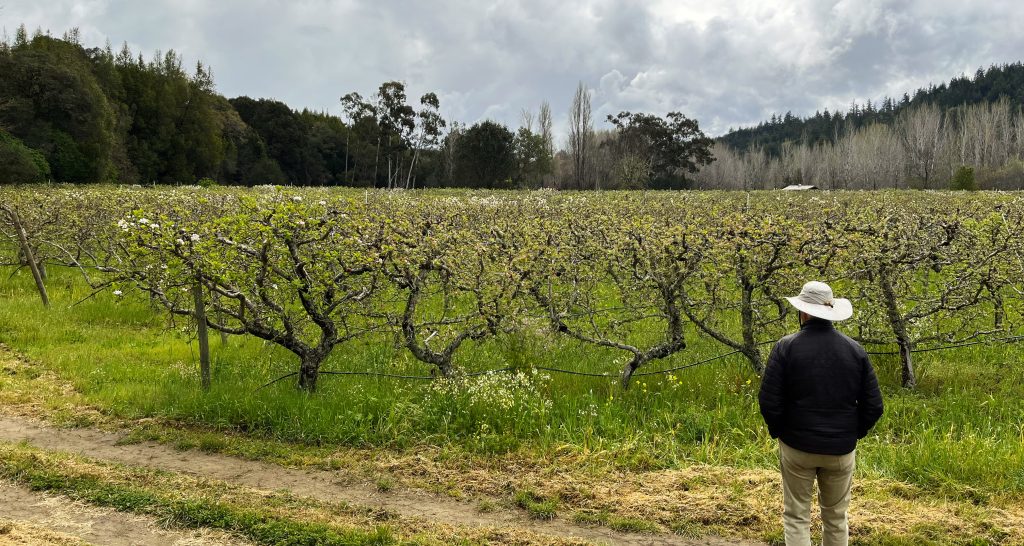
The billionaire Carlos Slim Helu once said, “Wealth is like an orchard. You have to share the fruit, not the orchard.” Perhaps? But wealth, like the proverbial orchard, requires land. And land, in fact, is shared. It is the shared home of many; it is ours and theirs present and future across species. Unfettered ownership of land as property is not true to life and slowly becoming an antiquated institution that historically was often used by a privileged few to capture unearned wealth.
As the source of our food, the cradle of our communities, and the primary producer in our economies, land has always been, and will continue to be, vital to our individual and collective health and wellbeing. In an age characterized by the acronym, VUCA (volatile, uncertain, complex, and ambiguous), the viability and security of food, water, soil, and other natural materials will become even more acute. This acuteness is evident in burgeoning movements, trends, and phenomena such as local food, REITs and farmland investing, community supported agriculture, land trusts and community land trusts, rematriation and food sovereignty, coastal inundation and climate migration, desertification and soil erosion, ecovillages and commoning, rights of nature, and on and on. Simply stated, “The Earth’s land area is finite. Using land resources sustainably is fundamental for human well-being.”[1]
[1] Climate Change and Land: an IPCC special report on climate change, desertification, land degradation, sustainable land management, food security, and greenhouse gas fluxes in terrestrial ecosystems, Intergovernmental Panel on Climate Change, 2019
#phiLANDthropy